Monographs: Dosage forms: Specific monographs: Daclatasvir tablets (Daclatasviri compressi)
Category. Antiviral (Hepatitis C virus nonstructural protein 5A inhibitor).
Storage. Daclatasvir tablets should be kept in a well-closed container.
Labelling. The designation of the container should state that the active ingredient is in the dihydrochloride form and the quantity should be indicated in terms of the equivalent amount of daclatasvir.
Additional information. Strength in the current WHO Model List of Essential Medicines (EML): 30 mg and 60 mg daclatasvir per tablet.
Requirements
Comply with the monograph for Tablets.
Definition. Daclatasvir tablets contain Daclatasvir dihydrochloride. They contain not less than 90.0% and not more than 110.0% of the amount of daclatasvir (C40H50N8O6) stated on the label.
Identity tests.
- Either test A or test B may be applied.
A. Carry out text A.1 or, where a diode array detector is available, test A.2.
A.1. Carry out the test as described under 1.14.1 Chromatography, High-performance liquid chromatography using the conditions and solutions given under “Assay”. The retention time of the principal peak in the chromatogram obtained with solution (1) corresponds to the retention time of the peak due to daclatasvir in the chromatogram obtained with solution (2).
To a quantity of powdered tablets, nominally equivalent to 10 mg daclatasvir, add 40 mL methanol R, sonicate for 5 minutes, allow to cool to room temperature, dilute to 50 mL and filter. Dilute 1 mL of the filtrate to 20 mL with methanol R. The absorption spectrum (1.6) of the resulting solution, when observed between 230 nm and 400 nm, exhibits one maximum at 314 nm.
A.2. Carry out the test as described under 1.14.1 Chromatography, High-performance liquid chromatography using the conditions and solutions given under “Assay”. Record the UV spectrum of the principal peak in the chromatograms with a diode array detector in the range of 230 nm to 400 nm. The retention time and the UV spectrum of the principal peak in the chromatogram obtained with solution (1) correspond to the retention time and the spectrum of the peak due to daclatasvir in the chromatogram obtained with solution (2).
B. Carry out test as described under 1.14.1 Chromatography, Thin-layer chromatography using silica gel R6 or similar as the coating substance and a mixture of 77 volumes of ethyl acetate R, 15 volumes of methanol R and 8 volumes of water R as the mobile phase. Apply separately to the plate 2 μL of each of the following two solutions. For solution (A), shake a quantity of the powdered tablets, nominally equivalent to 50 mg of daclatasvir, with 5 mL of methanol R and filter. For solution (B), use a solution containing 11 mg of daclatasvir dihydrochloride RS per mL methanol R. After removing the plate from the chromatographic chamber, allow it to dry in air or in a current of cool air. Examine the chromatogram in ultraviolet light (365 nm). The principal spot obtained with solution (A) corresponds in position, appearance and intensity with that obtained with solution (B).
Dip the plate in modified Dragendorff reagent TS. Dry it and examine the chromatogram in daylight. The principal spot obtained with solution (A) corresponds in position, appearance and intensity with that obtained with solution (B).
Dissolution. Carry out the test as described under 5.5 Dissolution test for oral dosage forms using as the dissolution medium 1000 mL of a solution prepared by dissolving 7.5 g of polyoxyethylene (23) lauryl ether R in 1000 mL dissolution buffer, pH 6.8, TS. Rotate the paddle at 75 revolutions per minute. At 30 minutes, withdraw a sample of 10 mL of the medium through an in-line filter. Allow the filtered sample to cool down to room temperature.
Dilute a suitable volume of the filtrate with dissolution medium to obtain a solution containing 0.012 mg of daclatasvir per mL. Measure the absorbance as described under 1.6 Spectrophotometry in the visible and ultraviolet regions of a 1 cm layer of the resulting solution at the maximum at about 323 nm, using the dissolution medium as the blank.
For each of the tablets tested, calculate the amount of daclatasvir (C40H50N8O6) in the medium, using the absorptivity value of 59.3 for daclatasvir 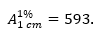
Evaluate the results as described under 5.5 Dissolution test for solid oral dosage forms, Acceptance criteria. The amount of daclatasvir released is not less than 75% (Q) of the amount declared on the label.
Related substances. Carry out the test as described under 1.14.1 Chromatography, High-performance liquid chromatography using the conditions given under “Assay” with the following modifications:
Use the following conditions for gradient elution:
- mobile phase A: 0.1% (v/v) solution of trifluoroacetic acid;
- mobile phase B: mixture of 30 volumes of methanol R and 70 volumes of acetonitrile R.
|
Time (minutes) |
Mobile phase |
Mobile phase |
Comments |
|
0–1 |
80 |
20 |
Isocratic |
|
1–25 |
80 to 55 |
20 to 45 |
Linear gradient |
|
25–30 |
55 to 30 |
45 to 70 |
Linear gradient |
|
30–35 |
30 |
70 |
Isocratic |
|
35–37 |
30 to 80 |
70 to 20 |
Return to initial composition |
|
37–45 |
80 |
20 |
Re-equilibration |
Prepare the following solutions using as diluent a mixture of 80 volumes of mobile phase A and 20 volumes of mobile phase B.
For solution (1), transfer a quantity of the powdered tablets, nominally equivalent to 25.0 mg of daclatasvir, to a 50 mL volumetric flask. Add about 30 mL of diluent, sonicate for 5 minutes, cool to room temperature, make up to the volume with the diluent and filter. For solution (2), dilute 1.0 mL of solution (1) to 100.0 mL. For solution (3), dilute 5.0 mL of solution (2) to 50.0 mL. For solution (4), dissolve the content of a vial of daclatasvir for peak identification RS (containing daclatasvir and the impurities B, E, G, H, I and J) in 1 mL.
Inject alternately 10 µL of solutions (1), (2), (3) and (4).
Use the relative retentions and the chromatograms supplied with daclatasvir for peak identification RS and obtained with solution (4) to identify the peaks due to the impurities B, E, G, H, I and J in the chromatograms. The impurities, if present, are eluted at the following relative retentions with reference to daclatasvir (retention time about 17 minutes): impurity J about 0.21; impurity I about 0.62; impurity H about 0.76; impurities B and C about 1.12; impurity F about 1.16; impurities D and E about 1.22; impurity K about 1.39; impurity L about 1.66 and impurity G about 1.82.
The test is not valid unless in the chromatogram obtained with solution (4) the peak-to-valley ratio (Hp/Hv) is at least 20, where Hp is the height above the extrapolated baseline of the peak due to the co-eluting impurities B and C and Hv is the height above the extrapolated baseline at the lowest point of the curve separating the peak due to daclatasvir from the peak due to the co-eluting impurities B and C. Also, the test is not valid unless in the chromatogram obtained with solution (3) the peak due to daclatasvir is detected with a signal-to-noise ratio of at least 10.
In the chromatogram obtained with solution (1):
- the area of any impurity peak is not greater than 2 times the area of the peak due to daclatasvir in the chromatogram obtained with solution (3) (0.2%);
- the sum of all areas of all impurity peaks is not greater than 1.5 times the area of the peak due to daclatasvir obtained with solution (2) (1.5%). Disregard any peak with an area less than the area of the peak due to daclatasvir obtained with solution (3) (0.1%).
Assay. Carry out test as described under 1.14.1 Chromatography, High-performance liquid chromatography using a stainless steel column (15 cm x 4.6 mm) packed with base-deactivated particles of silica gel, the surface of which has been modified with chemically-bonded octadecylsilyl groups (3.5 µm).
Use the following conditions for gradient elution:
- mobile phase A: 0.1% (v/v) solution of trifluoroacetic acid;
- mobile phase B: mixture of 50 volumes of methanol R and 50 volumes of acetonitrile R.
|
Time (minutes) |
Mobile phase A |
Mobile phase B |
Comments |
|
0–1 |
70 |
30 |
Isocratic |
|
1 - 13 |
70 to 60 |
30 to 40 |
Linear gradient |
|
13–16 |
60 to 15 |
40 to 85 |
Linear gradient |
|
16–18 |
15 |
85 |
Isocratic |
|
18–20 |
15 to 70 |
85 to 30 |
Return to initial composition |
|
20–25 |
70 |
30 |
Re-equilibration |
Operate at a flow rate of 1.0 mL per minute. As a detector, use an ultraviolet spectrophotometer set at a wavelength of 304 nm. For identity test A.2, use a diode array detector in the range of 230 nm to 400 nm. Maintain the column temperature at 40 °C.
Prepare the following solutions using as diluent a mixture of 70 volumes of mobile phase A and 30 volumes of mobile phase B.
For solution (1), weigh and powder 20 tablets. Transfer a quantity of the powdered tablets, nominally equivalent to 100.0 mg of daclatasvir, to a 100 mL volumetric flask. Add about 60 mL of diluent and sonicate for 5 minutes, cool to room temperature and make up to volume with diluent. Filter and dilute 5.0 mL of the filtrate to 50.0 mL. For solution (2), dissolve 55.0 mg of daclatasvir dihydrochloride RS and dilute to 50.0 mL. Dilute 5.0 mL of this solution to 50.0 mL.
Inject alternately 20 µL each of solutions (1) and (2).
Measure the areas of the peak responses corresponding to daclatasvir obtained in the chromatograms from solutions (1) and (2) and calculate the percentage content of daclatasvir (C40H50N8O6) in the tablets using the declared content of C40H50N8O6·2HCl in daclatasvir dihydrochloride RS. Each mg of daclatasvir dihydrochloride is equivalent to 0.910 mg of daclatasvir.
Impurities. The impurities limited by the requirements of this monograph include those listed in the monograph on Daclatasvir dihydrochloride, excluding impurity A.
 |  |